
TLDR
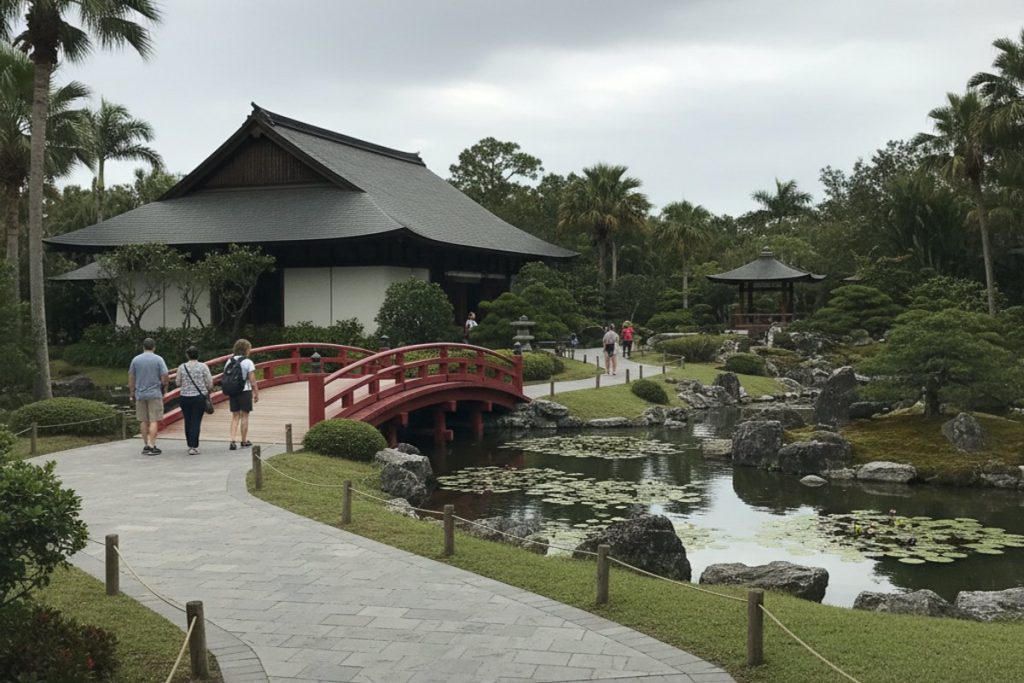
The Morikami is a 200-acre Japanese museum and garden complex in western Delray Beach, the only institution in the continental US dedicated to Japanese culture. Adult admission is $19, it is open Tuesday through Sunday 10am to 5pm, and you want 2 to 3 hours to see it properly. It sits 15 minutes from the beach off Atlantic Avenue, with free on-site parking.
Insider Tip
Arrive at 10am sharp on a Tuesday or Wednesday. The first two hours after opening are when the gardens are coolest, the light is best for photos, and the Cornell Cafe patio is still quiet. By 11:30am on a weekend, the parking lot is close to full and the koi lake has a small crowd around it.
Planning your Delray stay? Check current rates at Berkshire By The Sea, about 15 minutes from the Morikami by car and one block from the beach.
The History Behind the Museum
The Morikami’s story starts with the Yamato Colony, a group of Japanese agricultural settlers who came to Palm Beach County in the early 1900s. Led by Jo Sakai, the colony farmed pineapples and other crops in what was then undeveloped Florida scrubland west of what would become modern Delray Beach. The colony struggled with soil conditions, disease, and the challenges every pioneer farming community faced.
The colony eventually declined and most members moved on. One member, George Sukeji Morikami, stayed on and worked the land for decades. In the 1970s, he donated a significant portion of his accumulated property to Palm Beach County with the intention of preserving the colony’s legacy and sharing Japanese culture with the broader community. That donation became the foundation for what you see today.
The museum and gardens were established on that donated land and have grown into one of the most respected Japanese cultural institutions outside of Japan itself. That history gives the place a depth you feel when you are walking the grounds. For more on how the Morikami fits into a broader visit to the area, the Florida things to do guide puts it alongside the other Delray Beach highlights that make a full itinerary.
What to See Inside the Museum
The museum’s interior spaces feature rotating exhibitions of authentic Japanese art, ceramics, textiles, and cultural artifacts. The curation is genuinely impressive for a regional museum, and the exhibitions change throughout the year. A repeat visit in a different season almost always offers something new, which is one of the reasons locals hold annual memberships.
The permanent collection traces the full arc of the Yamato Colony’s history, from the early settlers’ journey to the eventual donation that created the museum. It is a specific and moving story told well, with photographs, farming tools, household items, and personal letters that make the abstract idea of early 20th-century Japanese immigration to South Florida feel grounded and real.
The museum runs interactive cultural programming and tea ceremonies on a regular basis. Check the calendar at morikami.org before your visit so you can plan around demonstrations and workshops that interest you. The gift shop carries genuine Japanese ceramics, books, art, and home goods at prices that run $10 for small items up to several hundred dollars for tea sets and art pieces. It is worth time on its own.

The Roji-en Gardens
The gardens are called Roji-en, which translates to Garden of the Drops of Dew. They are the centerpiece of the Morikami experience and represent six distinct traditional Japanese garden styles across the 200-acre property. The flat garden (hiraniwa) emphasizes open raked space, while the dry landscape garden (karesansui) uses rocks and gravel to represent water and mountains without using either.
The paradise garden is a pond strolling garden built around the idea of a Buddhist pure land, and it is the most photographed corner of the property. The early Edo period and late Edo period stroll gardens reflect the aesthetic development of 17th through 19th-century Japanese design, and the modern romantic garden gives a contemporary interpretation that rounds out the progression. Walking all six takes about 90 minutes at a reasonable pace.
A koi-filled lake winds through the property and connects the garden areas. The koi are large, colorful, and accustomed to visitors. Kids love them. Benches and small pavilions along the paths give you plenty of places to stop, and the whole circuit is paved and smooth, making it comfortable for most mobility levels and easy with a stroller.
Cornell Cafe and On-Site Dining
The Cornell Cafe sits on a garden patio and serves a Japanese-inspired menu that is genuinely good, not a tourist afterthought. It is open Tuesday through Sunday from 11am to 3pm. Bento boxes run about $15 to $18, salads and ramen run $12 to $16, and seasonal specials rotate with the time of year. The setting alone is worth stopping for, especially on a mild day when the garden views are at their best.
Arrive before noon or after 1:30pm to avoid the lunch rush. The cafe gets busy in the middle of the day, especially on weekends and during festivals, and the patio has a finite number of tables. If you miss the window, the Morikami is 10 minutes from the restaurants of western Delray, and 15 minutes from the dense Atlantic Avenue dining scene covered in our Florida restaurants guide.
For an all-day outing, plan the Morikami for morning through early lunch, then head back east for a beach afternoon. The combination of Japanese gardens and Atlantic Ocean in the same day is one of the small pleasures of a Delray Beach stay, and it captures what makes the town different from almost anywhere else on the South Florida coast.
Admission, Hours, and Festivals
The Morikami is open Tuesday through Sunday, 10am to 5pm, with last admission 45 minutes before closing. It is closed on Mondays, Thanksgiving, and Christmas Day. Adult admission is $19, seniors 65 and over are $16, military with ID $16, college students $14, children 6 to 17 are $12, under 5 is free, and members enter free. Palm Beach County library cardholders should check for free family passes before visiting. Availability is limited but worth a quick call to your branch.
The Morikami hosts several major cultural festivals throughout the year. The Hatsume Fair in late February or early March features taiko drumming, tea ceremonies, and food, and it is the biggest event on the calendar. The Bon Festival in mid-August and the Oshogatsu New Year celebration in early January round out the year. Festival tickets run $20 to $30 and should be booked in advance through morikami.org, because these events sell out in advance.
Weekday mornings are consistently the least crowded. If you want the gardens largely to yourself, aim for a Tuesday or Wednesday between 10 and 11am, ideally November through April when the weather is most comfortable. Festival weekends and the Hatsume Fair are the exceptions where the property fills well beyond normal capacity, so plan around them or into them depending on what you want.
Getting There and Practical Tips
The Morikami is at 4000 Morikami Park Road in western Delray Beach. From East Delray on A1A, take Atlantic Avenue west past I-95 and the Florida Turnpike to Jog Road, then follow signs to Morikami Park Road. The drive is about 15 minutes under normal traffic. It is not walkable or bikeable from downtown or the beach, so plan on driving, rideshare, or the free trolley to your car.
Parking is free and included with admission. The on-site lot is generally adequate but fills fast on festival weekends, so arriving before 11am is the safer move for major events. Uber and Lyft run $15 to $25 each way from East Delray, which is a reasonable option if you do not want to deal with parking and are not planning to combine the visit with other western-area stops.
Wear comfortable walking shoes. The paths are smooth but you will be on your feet for a while across the garden loop. Photography is welcome throughout the gardens, though not in some rotating exhibits. Early morning light is particularly good for garden shots before the midday Florida sun flattens everything out. November through March is the most comfortable time to spend extended time outdoors here. Summer visits are best limited to the first two hours after opening.
You might also find these useful: Things to Do in Florida: A Local’s Guide, Wakodahatchee Wetlands Visitor Guide, Atlantic Avenue Delray Beach Guide, Best Time to Visit Florida.
What Guests Say About Staying in Florida
Guests rate it 8.0/10 from 321 reviews.
Great place in proximity of the Atlantic Sea with great staff, 2 minutes walk to beach, 15 minute walk to Atlantic Avenue shops
What Guests Say About Staying Here
Guests rate it 8.0/10 from 321 reviews.
The apartment is clean, well-kept, and has pretty much everything you need. Easy and fast check-in and check-out
See What Berkshire By The Sea Looks Like

Check current prices at Berkshire By The Sea
A beach-block stay in Delray Beach, 15 minutes from the Morikami and one block from the Atlantic Ocean.
Check Available RoomsWe may earn a small commission if you book through this link. It does not cost you anything extra.
See What Berkshire By The Sea Looks Like
Frequently Asked Questions
How much does the Morikami Museum cost?
Adult admission is $19, seniors 65+ are $16, college students with ID are $14, and children 6 to 17 are $12. Kids under 5 are free. Palm Beach County library cardholders can sometimes check out free family passes, which is worth looking into before you drive over.
How long should I spend at the Morikami?
Plan 2 to 3 hours to walk the Roji-en gardens and see the museum without rushing. Adding lunch at the Cornell Cafe stretches it to 3 to 4 hours. You can do a faster visit focused only on the gardens if you are short on time.
What time does the Morikami open?
The Morikami opens Tuesday through Sunday, 10am to 5pm, with last admission 45 minutes before closing. It is closed Mondays, Thanksgiving, and Christmas Day. Weekday mornings before 11am are consistently the quietest, especially Tuesday and Wednesday.
How do I get to the Morikami from Delray Beach?
The Morikami is at 4000 Morikami Park Road in western Delray Beach, about 15 minutes by car from the Atlantic Avenue and beach area. Take Atlantic Avenue west past Jog Road to Morikami Park Road. It is not walkable or bikeable from downtown or the beach.
Is there parking at the Morikami Museum?
Yes, Morikami has a large free on-site parking lot included with admission. The lot is usually adequate but fills up fast on major festival weekends like Hatsume Fair and Oshogatsu, so arrive before 11am on those days.
What is the Roji-en Garden?
Roji-en means Garden of the Drops of Dew and is the 200-acre garden that represents six distinct historical Japanese garden styles across the property. A koi-filled lake winds between them. The full walking loop with benches and gazebos takes 60 to 90 minutes at a pace that lets you actually see each garden.
What festivals does Morikami host?
The Hatsume Fair in spring (late February or early March) is the biggest, with tea ceremonies, taiko drumming, and food. The Bon Festival in summer and Oshogatsu in January are the other two major events. Festival tickets usually run $20 to $30 and should be booked in advance at morikami.org.
Is the Morikami good for kids?
Yes, and kids usually enjoy it more than expected. The koi lake is a highlight for younger visitors, the garden paths are smooth and stroller-friendly, and the museum runs kids’ cultural programming on weekends. Children under 5 are free, and the Cornell Cafe has kid-friendly menu options.
Planning a Stay in Florida?
Guests rate Berkshire By The Sea 8.0/10 from 321 reviews. Check prices and availability for Berkshire By The Sea on Booking.com, or compare other places to stay nearby.
Check AvailabilityWe may earn a small commission if you book through this link. It does not cost you anything extra.
Staying at Berkshire By The Sea? Browse rooms, facilities and more local guides.
Back to Berkshire By The Sea